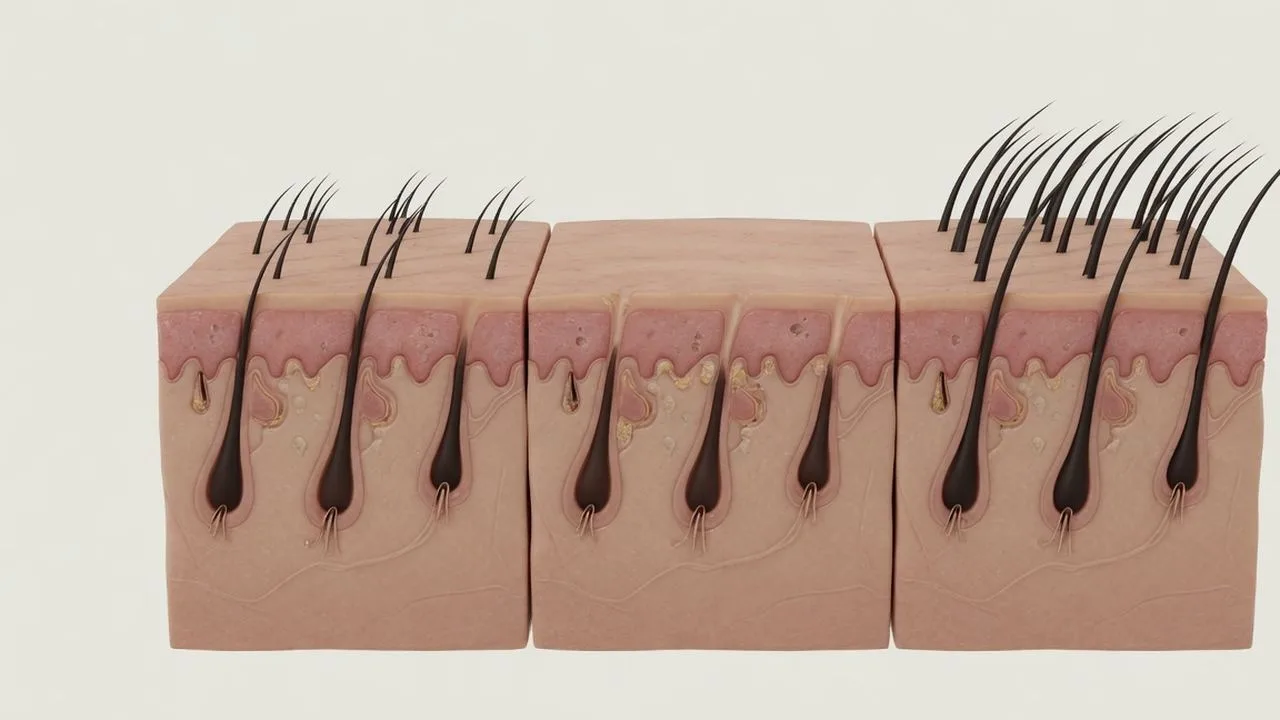
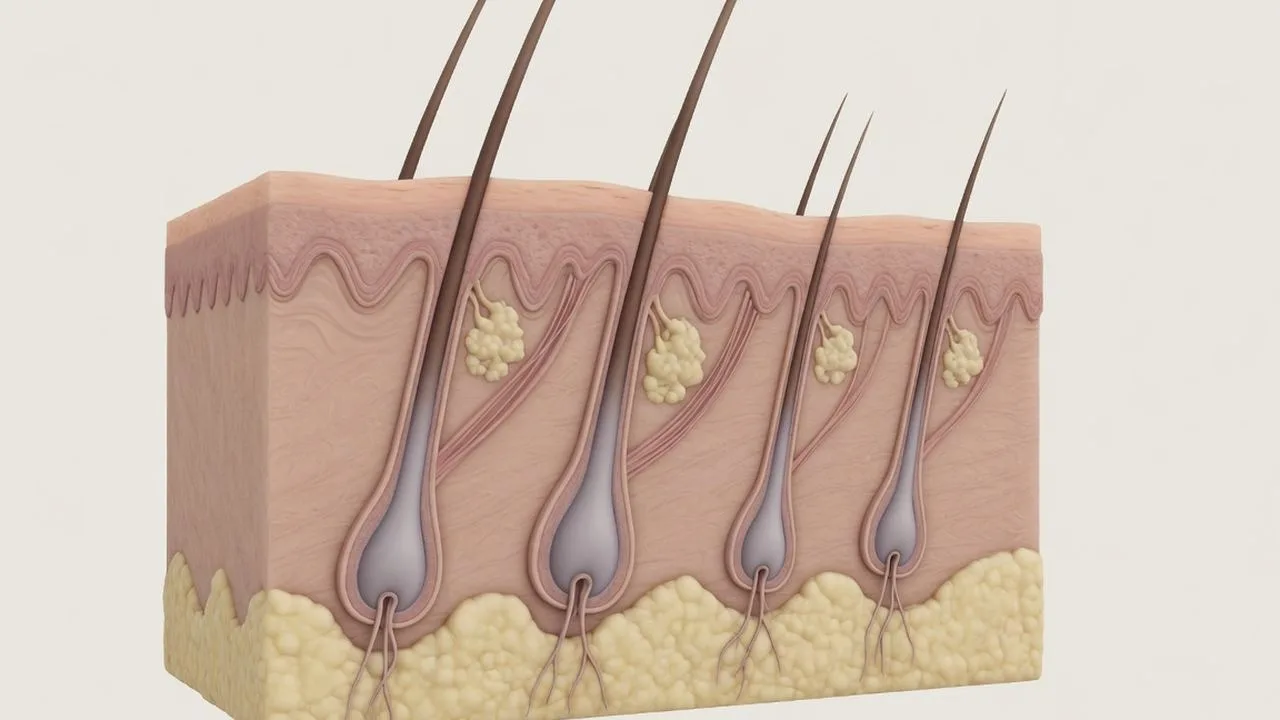
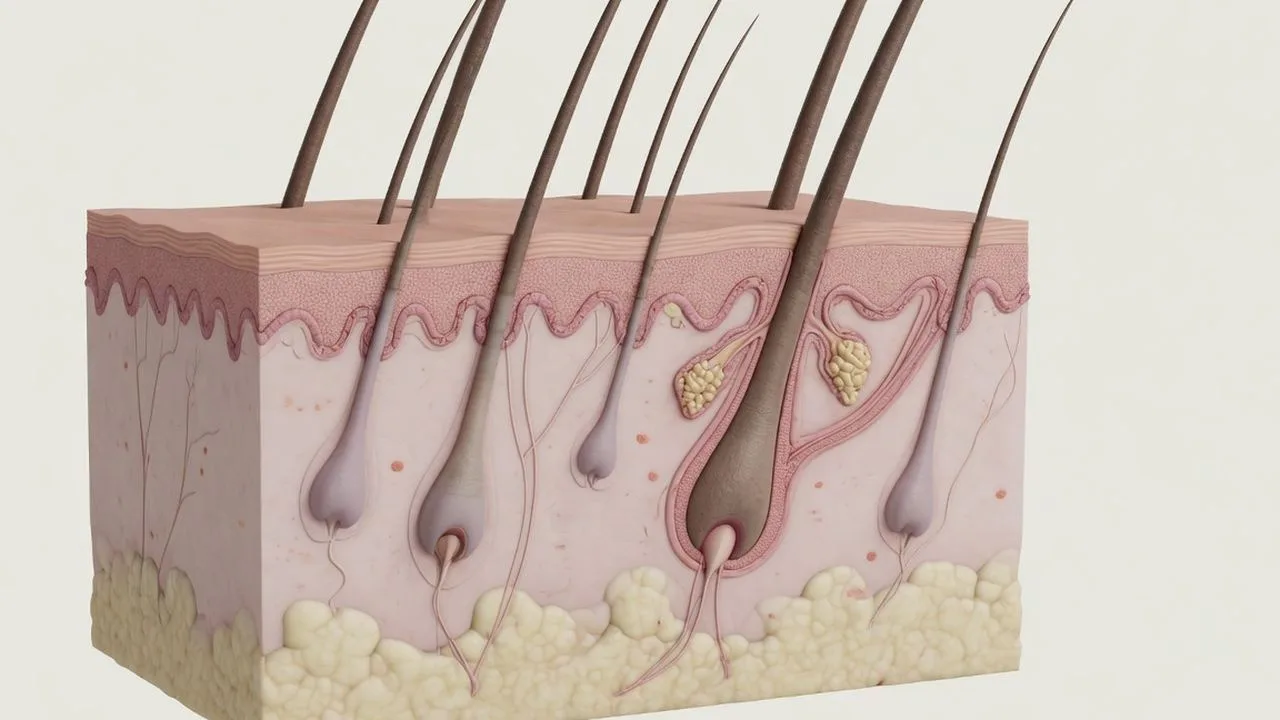
People comparing cosmetic surgery options in Australia often meet this as a clinic package for patchy cheeks, a thin moustache, or a scar that will not grow hair. Multiple transplant sessions are usually needed. This page is general information only and is not medical advice.
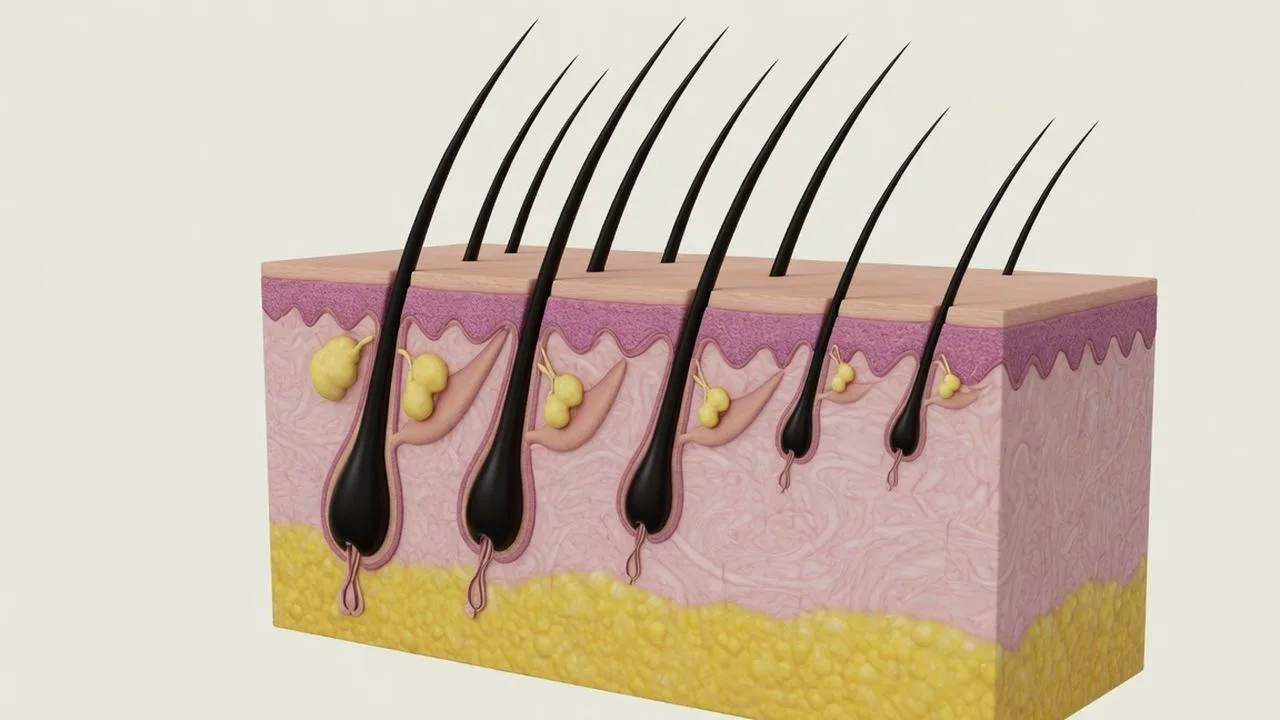
What Is a Beard Transplant?
A beard transplant moves existing scalp hairs onto patchy areas of your face. Hair transplantation can also restore eyelashes, eyebrows and areas where scarring has stopped growth.
All of these operations take hair-bearing skin from one part of the scalp and graft it onto thinning skin or an area of trauma. Healthy grafts leave a donor site and are relocated so hair can grow where it was previously affected.
- It uses hair you already have. Follicles come from thicker areas, often the back of the head, not from a bottle or a cream.
- Beard hair is not the same as scalp hair. Beard shafts are coarser, with a larger root and a blunter tip, so scalp grafts on the face can look different from native beard hair.
- The Medical Board still files it as a cosmetic procedure. Hair transplants sit among non-surgical cosmetic procedures: they do not cut beneath the skin in the Board's definition, but they may pierce the skin. That label does not mean the work is trivial.
How Does a Beard Transplant Work?
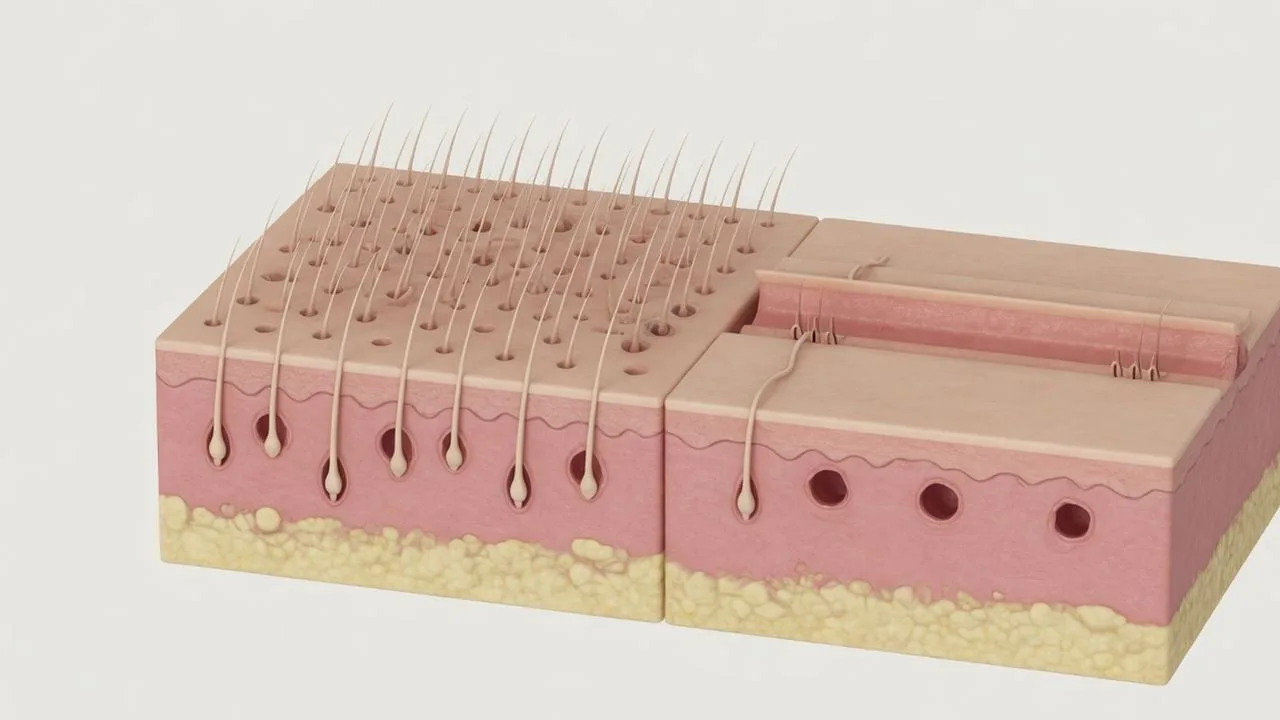
Grafts are taken from the back of your head and placed into facial skin. In the beard-reconstruction literature, the midoccipital scalp is the preferred donor site, and those grafts can be taken by FUE or by FUT.
FUE extracts grafts as individual follicular units. Putting them in is the same kind of job as after a strip. FUE is also listed among options for limited cosmetic areas, including moustaches. Compare the harvest labels with the hair transplant techniques guide before you treat a clinic slogan as a third method.
| FUE | FUT (strip) | |
|---|---|---|
| How hair is taken | Individual follicular units, one group at a time | A strip of scalp, then that strip is divided into grafts |
| Typical tools | A round tube (punch) can harvest donor skin | A scalpel can harvest donor skin |
| What is placed in the face | Mostly single or two hair grafts in the beard paper | The same class of grafts after the strip is split |
| How they go in | Premade slits, or a stick and place method | Premade slits, or a stick and place method |
- Donor site first. The back and sides of the head are the usual bank of healthy hair.
- Then the face. Grafts go into the moustache, goatee, cheeks or sideburns as planned in that consult, not as a standard Australian map.
Who Can Perform a Beard Transplant in Australia?
A registered medical practitioner should do the assessment and the procedure. Cosmetic procedures must only be provided by medical practitioners with the knowledge and training for the specific work on offer, and the experience to handle routine care and likely complications.
Check the Ahpra public register to confirm that the individual practitioner who will perform the procedure is registered to practise in Australia. When a practitioner appears on the register they are allowed to practise, and the register also publishes any registration type or conditions that limit what they can do.
- The clinic name is not the check. Look up the person who will assess you and the person who will take and place the grafts.
- Surgeon is a protected title. When medical practitioners use that title, it is restricted to those with specialist registration in surgery, obstetrics and gynaecology, or ophthalmology. They must not use a protected title unless they hold the related registration type.
- A title is not a technique licence. Registration does not prove a particular cosmetic method or an aesthetic result.
- Ask about training for this work. The Medical Board guidelines expect appropriate knowledge for the specific cosmetic procedures being offered.
- A second opinion is reasonable. Any surgical or invasive procedure carries risks, and ASPS tells people to seek the opinion of a Specialist Plastic Surgeon before proceeding.
- Setting still matters. Healthdirect advises making sure the surgery is performed by qualified surgeons in properly accredited facilities with an anaesthetist present.
What Happens Before a Beard Transplant?
They look at your face, your donor hair, and whether you are well enough. The treating medical practitioner must give you enough information, in a verbal discussion and in written information in plain language, so you can decide whether to go ahead.
That information must cover what the procedure involves, possible outcomes, risks and complications, recovery, the practitioner's registration type and training, and costs. It must not glamorise the procedure or overstate results.
- Reasons and expectations. The practitioner who will perform it must discuss and assess your reasons and motivation, and discuss your expectations so they are realistic.
- Psychological screening. They must assess you for underlying psychological conditions such as body dysmorphic disorder, which may make you an unsuitable candidate.
- Other options, including stopping. They must discuss other options, including treatments offered by other health practitioners and the option of not having the procedure, and must decline if they believe it is not in your best interests.
- Hair evaluation. That typically includes growth pattern, the extent of loss, family history, and any prior surgical or medical treatment.
- Donor hair at the back and sides. Candidates must have healthy hair growth there to serve as donor areas.
- Smoking. Smokers are at increased risk of complications, and people considering this surgery should try to quit.
What Happens During a Beard Transplant?
You are usually numb under local anaesthetic while grafts are taken and placed. Hair transplant grafts are usually performed under local anaesthetic, and each session can last from two to eight hours depending on the number of hairs transplanted.
Hair replacement surgery is usually done under local anaesthesia with sedation. General anaesthesia may be used for more complex cases involving tissue expansion or flaps.
| Stage | What usually happens |
|---|---|
| Numbing | Local anaesthetic, often with sedation |
| Taking hair | Punch or scalpel at the donor scalp |
| Sorting grafts | Mostly single or two hair grafts for beard and moustache work in the named paper |
| Placing hair | Premade slits, or stick and place, into facial skin |
| Time on the day | Two to eight hours, set by how many hairs are moved |
What Happens After a Beard Transplant?
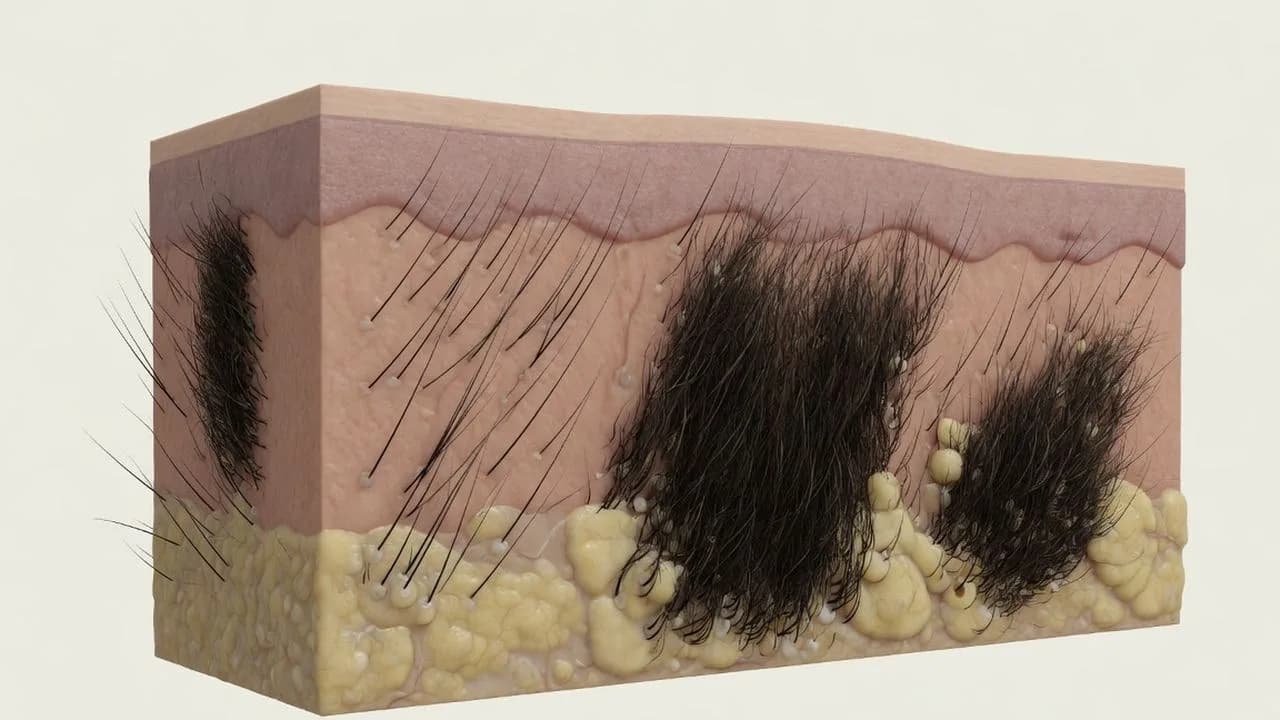
Expect swelling, tightness, and months of waiting before the hairs fill in. Immediately afterwards you can expect bruising and swelling, possible numbness, pain, throbbing and discomfort, and a tight feeling in the scalp.
Most hair transplants are successful, although it can take up to nine months before the hair takes root and begins to fill in, and it is not uncommon for transplanted hair to fall out after several months and then regrow. In the beard-reconstruction paper, results started to become visible as early as three months and continued to change over one year. That is one paper's observation, not a timetable for you.
- Scars stay. Most scars should be covered with hair and hard to see. Any visible scarring will be permanent, but should fade with time. Read the hair transplant scars guide for how donor-site patterns differ.
- Shaving is not a universal day count. In that same paper, shaving was possible from the eighth day onwards as part of that team's protocol. Your own written aftercare is the one that applies.
- Touch-up is expected. You will almost certainly need touch-up surgery to improve the look.
- Revision sits beside touch-up. Depending on the extent of the procedure, some patients may require further treatment, and revisional surgery may also be necessary to correct irregularities.
What Are the Risks of a Beard Transplant?
Bleeding, infection, scarring, and grafts that fail to grow can all occur. The same family of harms for scalp work is collected on the hair transplant risks article. Ask how each item applies to facial skin.
Healthdirect lists excessive bleeding, infections, thick scars on the scalp, a patchy unnatural look, and grafted hair not growing as expected. Better Health Channel adds risks of anaesthesia including a rare allergic reaction, bleeding or infection, scars that may be severe, raised, reddened and itchy, nerve damage including permanent loss of sensation, death of the skin grafts, tissue death along the wound, and further surgery to treat complications. Neither source publishes a rate for how often these happen.
- Beard-specific texture problems. The beard paper lists bumpiness or irregularity of skin, especially in the goatee and moustache, improper graft direction, mild redness and swelling for a few days, and cobblestoning below the lower lip.
- Grafts that do not take. ASPS lists infection, excessive bleeding, wide scars, a graft failing to take so the skin plug dies and surgery must be repeated, and an unnatural patchy look.
- Smoking raises the complication risk. That is a reason the smoking conversation happens before the day, not after a problem appears.
| Question area | What to clarify before proceeding |
|---|---|
| Procedure team | Who is responsible for assessment, planning and each stage of the procedure |
| Written plan | The proposed procedure, expected scope, follow-up pathway and document handover |
| Risk discussion | Personal risks, benefits, alternatives and when to seek help |
| Quote scope | Inclusions, exclusions, potential additional costs and cancellation terms |
| Aftercare | Contact arrangements and continuity of care after the procedure, including out of hours |
Is a Beard Transplant Right for Me?
It depends on donor hair, health, expectations, and what your practitioner finds. Hair transplantation is not suitable for all people with hair loss. Hair replacement surgery is an individualised procedure and may not be suitable for everyone.
No allowed source sets a best age. That question belongs in the consult, next to family history and how your remaining hair behaves.
| What the sources support | What they do not settle | |
|---|---|---|
| Donor hair | You must have healthy hair at the back and sides to use as donor plugs | How many grafts your face needs as an Australian clinic quote |
| Coverage | You will not achieve the full coverage you had before hair loss | A promised density or style |
| Health | You should be physically healthy enough, and you will usually need to be a non-smoker or have stopped | A quit-by date |
| Psychology | Body dysmorphic disorder may make someone an unsuitable candidate | A self-score you can complete at home |
| Lasting growth | Healthdirect says many people have good results, which are usually permanent | Forever, or a stop to later native-hair change |
Published indications in the beard paper include congenital absence or low density, scars from trauma, burns or surgery, traction alopecia, long-standing alopecia areata, stable cicatricial alopecia, postfolliculitis scarring, correction of a previous transplant, cosmetic thickening of existing facial hair, and moustache reconstruction after cleft lip repair. That list is not a CostDoc verdict that you qualify.
Non-surgical alternatives to hair transplant surgery include prescription medications, wigs, hair pieces or hair extensions, and accepting that hair loss is a natural part of ageing. If the wider pattern is male pattern baldness, start with the male pattern baldness guide rather than treating a beard plan as a cure for later scalp loss.
How Much Does a Beard Transplant Cost in Australia?
Session size, technique, who does the work, and later touch-up all move the figure. Current prices for this procedure, and what Medicare does and does not cover, are set out on the linked CostDoc hair transplant cost and hair transplant Medicare pages.
Written information before a non-surgical cosmetic procedure must include the total cost, deposit and payment details, refund of deposits, follow-up care payments, and possible further costs for revision or additional treatment. A medical practitioner must not offer, promote or recommend financing schemes to patients, either directly or through a third party, such as loans or commercial payment plans, as part of a non-surgical cosmetic procedure.
- Session length and hair numbers. Two to eight hours on the day, set by how many hairs are moved.
- Technique label. FUE and FUT are different harvests. The placing step is still placement into facial skin.
- Planning numbers from one paper, not a quote. That paper reports 2,000 to 2,500 grafts for congenital hypotrichia or atrichia, a possible second sitting, and around 1,000 to 1,100 grafts for a moustache and a dense goatee. Those figures are not an Australian clinic tariff.
- Who does the work. Training and experience for this specific procedure belong in the written information.
- Later work. Touch-up is almost certain, and revision may be needed to correct irregularities, so follow-up payments and further-treatment costs belong on the quote.