Both options sit in dentistry next to teeth whitening and root canal treatment. Porcelain veneers, composite veneers and dental crowns are the names you will hear in a consult. This page is general information only and is not medical advice.
How Do Veneers and Crowns Sit on a Tooth?
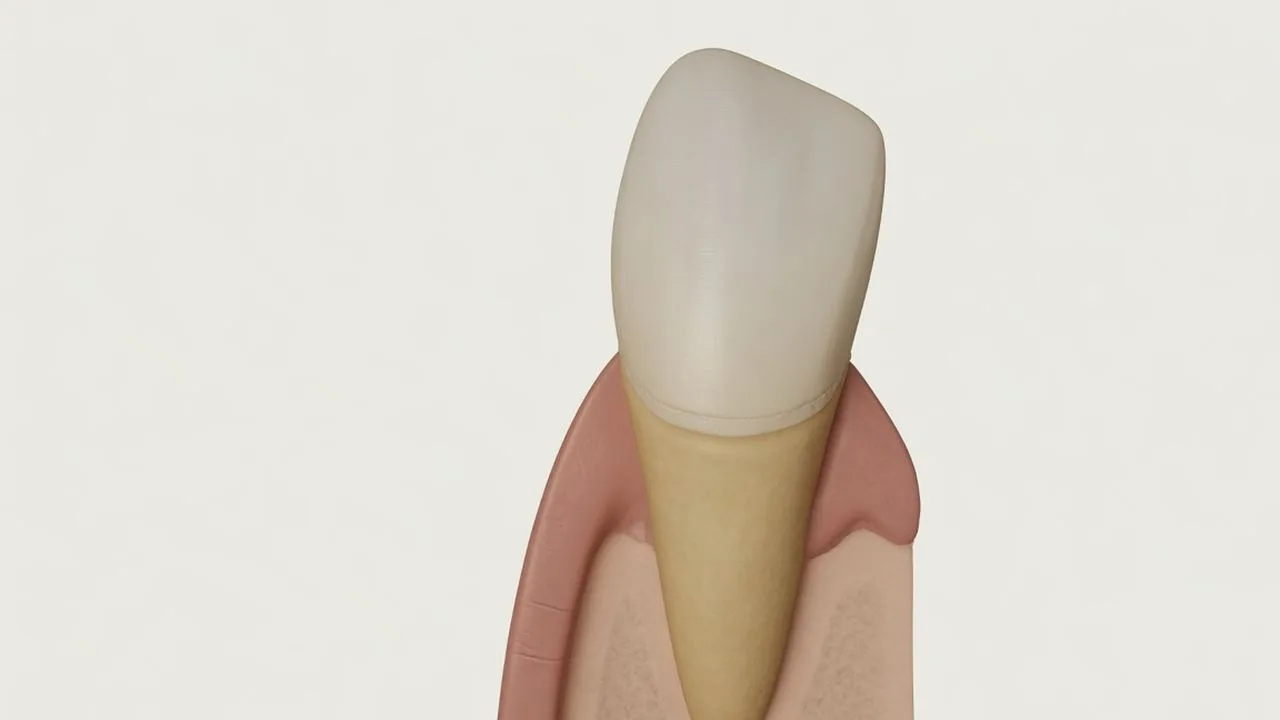
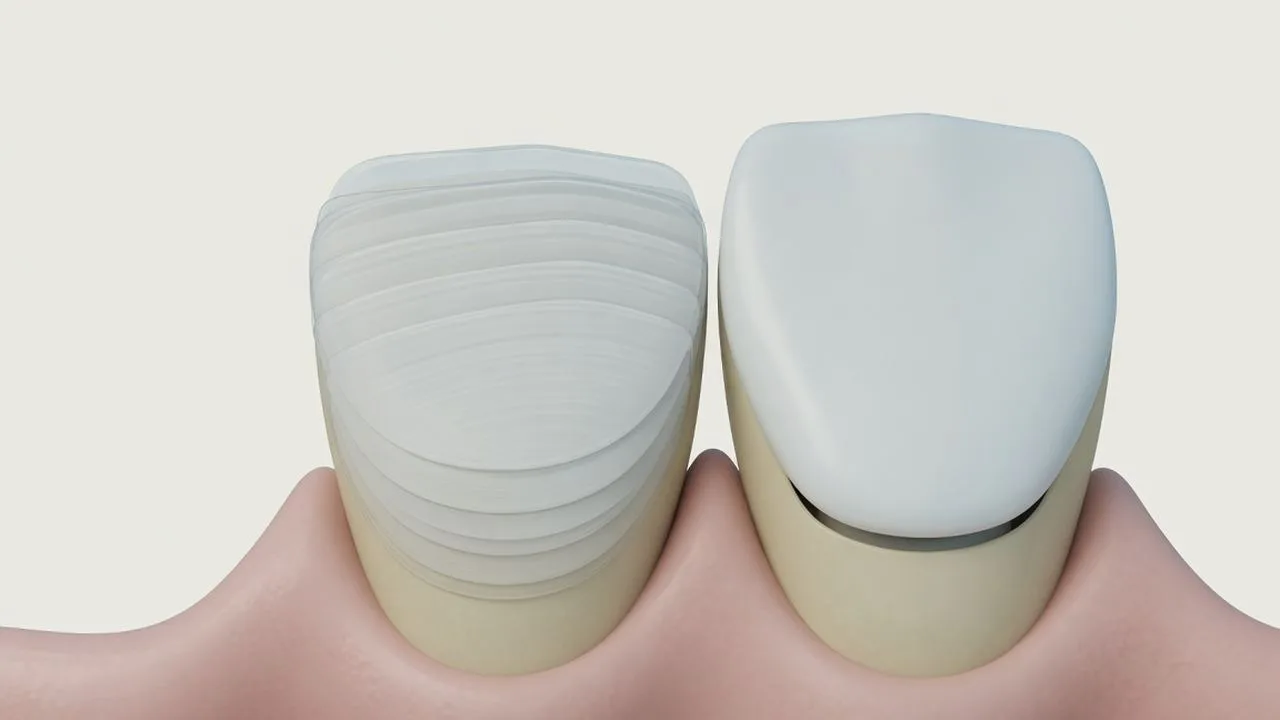
A veneer sits on the front face. A crown hoods the whole tooth.
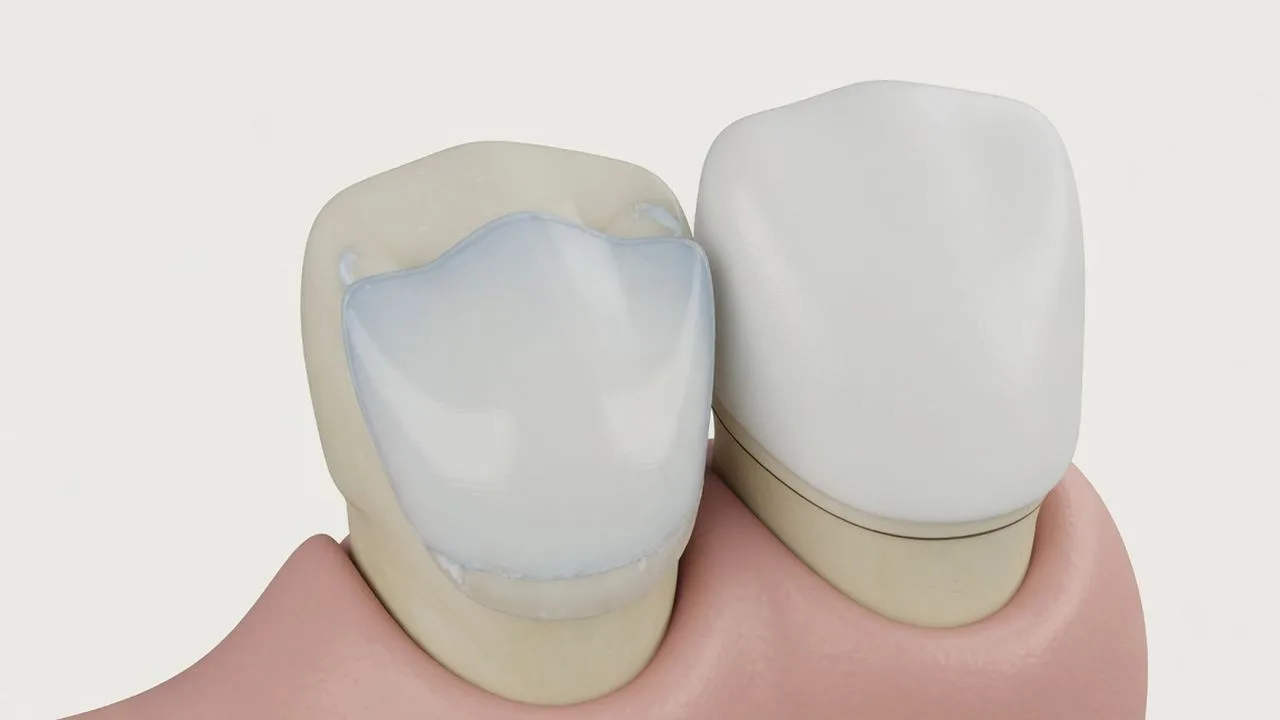
The Australian Dental Association describes a veneer as a thin shell of porcelain or composite resin glued to the front surface. You can have one or a few. Once bonded, you cannot take them off the way you take out a plate. They are very thin, so not much or no tooth structure has to be cut away.
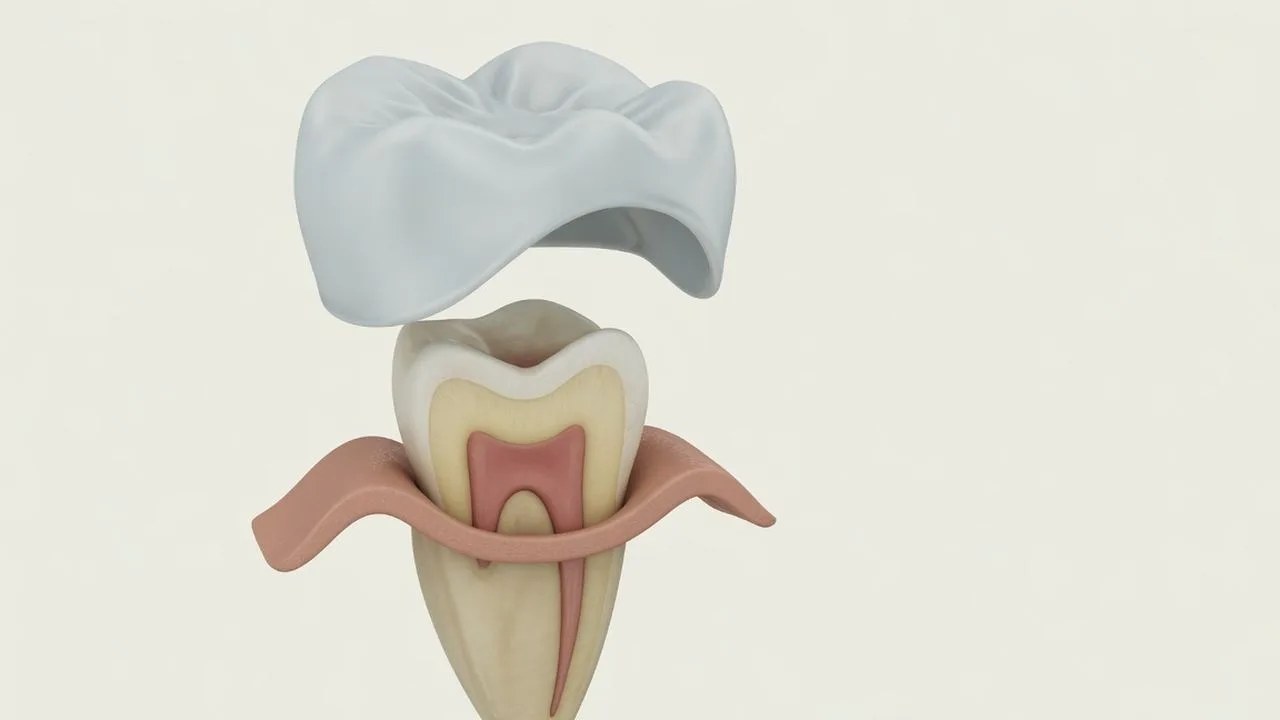
A crown is a metal or ceramic shell placed over the entire tooth to fully cover it. The natural tooth is cut back first so the cap can fit. That cap can make the tooth stronger and protect what is left inside. Crowns can be porcelain, zirconia, gold alloy, or porcelain joined to metal, and porcelain or zirconia colour can be matched to neighbouring teeth.
- Veneer: front surface only, porcelain or composite resin.
- Crown: entire tooth, porcelain, zirconia, gold alloy, or porcelain and metal.
- Shared job: both can change how a tooth looks. A crown can also protect a weakened tooth.
How Do Veneer and Crown Techniques Compare?
Composite veneers are often built in one visit. Porcelain veneers and many crowns need a lab stage.
For a composite veneer, the dentist applies white filling material directly to the front of the tooth and shapes it in the chair. That is usually one appointment, with a follow-up sometimes needed if several teeth are done. Porcelain veneers are made by a technician from an impression or a 3D scan and usually need at least two appointments. A small amount of natural tooth may be trimmed so the veneer sits flush, and a local anaesthetic may be used for that step.
Crown work often takes two visits. At the first, the dentist cuts back and reshapes the tooth, takes an impression or scan, and places a temporary plastic crown. At the second, the finished crown is glued or cemented. Some dentists finish a crown in one day when they have the equipment on site. For a crown, a thin layer of tooth may be removed from the top and all around, not only from the front. Porcelain veneers can look more realistic and last longer than resin veneers, and they generally cost more.
| Feature | Veneer | Crown |
|---|---|---|
| Where it sits | Front surface of the tooth | Entire tooth as a cap |
| How much tooth is trimmed | Little or none, sometimes a small front trim | Top and all around |
| Composite or chairside option | Direct composite, often one visit | Same-day crowns in some clinics |
| Laboratory option | Porcelain shell, usually two visits | Lab crown after a temporary, often two visits |
| Materials named | Porcelain or composite resin | Porcelain, zirconia, gold alloy, or porcelain and metal |
What Risks Come With Veneers and With Crowns?
Veneers can chip, stain or fall off. Crowns can loosen, and the tooth underneath can still decay.
Veneer risks include jaw pain, the veneer cracking or falling off, extra sensitivity because some enamel is removed, gum shrinkage that shows the edges, a colour that cannot be changed later, and other teeth discolouring so they no longer match. A veneer can also stain at the margins and need replacing. Once a tooth is cut for a veneer, it may always need a veneer. Healthdirect publishes no rate for how often these veneer complications occur.
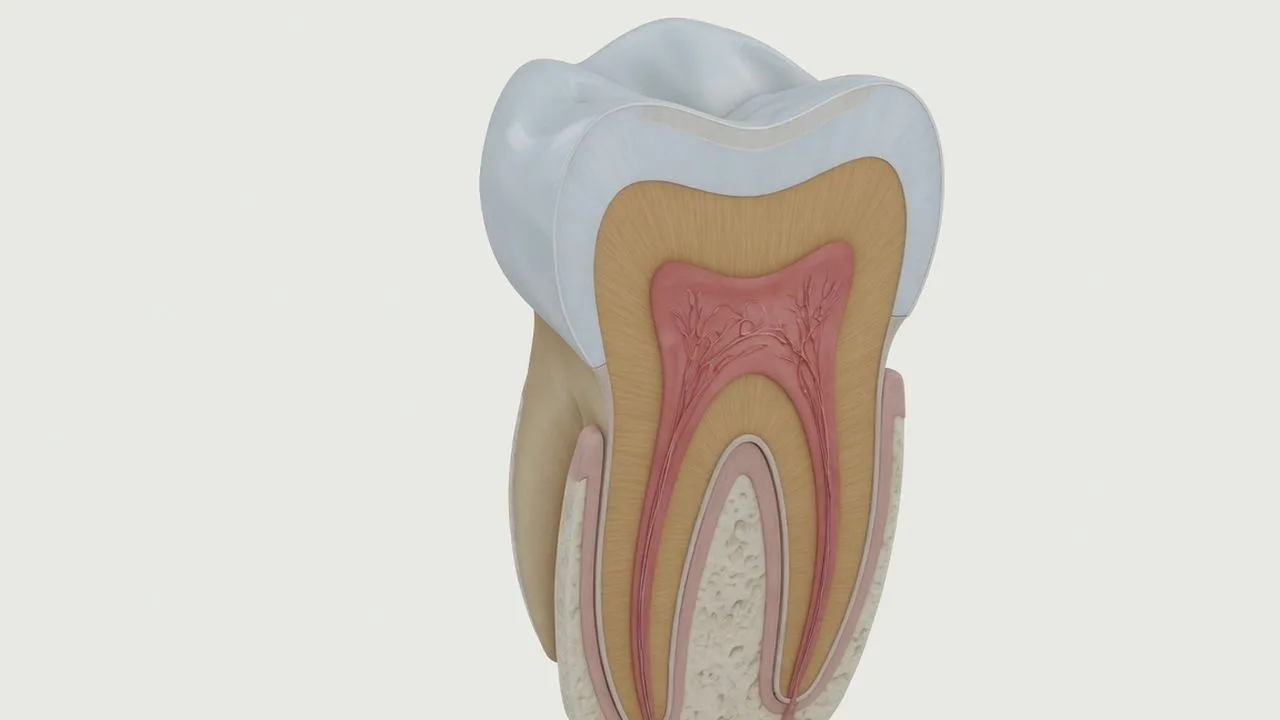
Crown complications include the cap coming loose, breaking, chipping, cracking or falling off, the tooth under it breaking, decay around or under the crown, sore or swollen gums, and a poor fit that makes chewing sore. Healthdirect does not publish a rate for how often these happen. Cutting for a crown can get close to the pulp, so the tooth may later need root canal treatment. Once a tooth is cut for a crown, it will always need a crown. The cap itself cannot decay. The tooth underneath still can, which is why cleaning and check-ups still matter.
Having a crown or veneer does not mean the tooth is finished with dentistry. Decay can still start, and restorations can chip, fracture or no longer match and need to be replaced.
| Question area | What to clarify before proceeding |
|---|---|
| Procedure team | Who assesses the tooth, who cuts it, and who fits the veneer or crown |
| Written plan | Front shell or full cap, how much tooth will be trimmed, and what happens if it chips |
| Risk discussion | Sensitivity, pulp risk, gum-edge show-through, decay under a crown, and when to seek help |
| Quote scope | Material, number of teeth, item numbers, extras, and what a remake would involve |
| Aftercare | Who to call if a veneer or crown comes off, including out of hours |
When Might a Dentist Discuss a Veneer or a Crown?
A veneer is discussed for front-of-tooth appearance. A crown is discussed when the tooth also needs a full cap.
Veneers can be useful if teeth are discoloured or stained, a bit crooked, oddly shaped, chipped or slightly broken, or widely spaced. Veneers may not suit people who grind or clench, or who have gum disease. They help appearance. They are not used to repair damage, they do not straighten a bite, and they do not fix decay.
A dentist or prosthodontist might suggest a crown for a broken or cracked tooth, a badly decayed tooth, after root canal treatment, or for stains, chips or an unusual shape. Crowns are commonly recommended after a root canal, particularly on premolars and molars. After a root canal, the biting surface is covered with a filling or a crown so the tooth is less likely to break. Putting that final restoration off raises the odds of the tooth breaking or needing extraction.
The ADA treats crown, bridge and veneer work as elective: it may fix damaged teeth, or it may change how teeth look. Before any of that, the dentist should check the whole mouth and treat disease first.
- Front chips, colour, small gaps: veneers are often the option on the table.
- Cracks, large decay, root-treated back teeth: crowns are commonly discussed.
- Grinding, clenching, gum disease: ask whether a veneer is even in play.
- Alignment of a bite: braces, not a veneer, are the tool that moves teeth.
Who Provides Veneers and Crowns in Australia?
A general dentist or a prosthodontist can do the work. There is no "cosmetic dentist" register.
Dentists are registered with the Dental Board of Australia. Crown, bridge and veneer treatments can be done by a general dentist or by a prosthodontist, a dental specialist. A prosthodontist is a specialist in crown, bridge and denture work. A dentist cannot call themself a specialist unless they hold that specialist registration. A dentist cannot be registered as a Cosmetic Dentist in Australia.
Check the individual on the Ahpra public register, not the clinic brand. When a name appears, that person is allowed to practise. The register also shows registration type and any conditions that limit what they can do. It is not a skill badge for veneers or crowns.
- Confirm the person who will cut the tooth, not only the practice name.
- Ask whether they are a general dentist or a registered prosthodontist.
- Ignore "cosmetic dentist" as if it were a specialist title.
How Much Do Veneers and Crowns Cost in Australia?
Material, how many teeth, and the clinic's own fee list are what move the figure. Current prices, and what Medicare does and does not cover, are on CostDoc's veneers cost and veneers and Medicare pages.
The Australian Government does not generally cover dental services, so most of the bill sits with you. Private extras policies vary. Major dental may list crowns, veneers, bridgework, implants and dentures, with yearly limits and different terms between funds. There are no standard dentist fees. Each clinic sets its own. Ask what the procedure will cost, ask for the item numbers, and compare a few dentists. Porcelain veneers are generally more expensive than resin veneers, and the figure also depends on how many you have and how large they are.
- Material: porcelain versus composite resin, or porcelain, zirconia, gold alloy or mixed metal for a crown.
- Scope: number of teeth and their size.
- Clinic fees: no national standard fee, so item numbers let you compare.
- Extras: major dental may include crowns and veneers, subject to the policy.
- Medicare: dental work is generally not a Medicare-paid service.
Is a Veneer or a Crown Right for You?
It depends on how much tooth is left, whether the problem is the front face or the whole tooth, and whether disease is already under control.
Suitability is a conversation with the dentist who has seen the tooth, the bite and the gums.
| Situation | What the sources support |
|---|---|
| Stain, small chip, odd shape, small gap on an otherwise straight front tooth | A veneer may be discussed. |
| Grinding, clenching, or gum disease | A veneer may not be suitable. |
| Bite that needs straightening | Veneers do not fix a bite. Braces are the alignment option. |
| Colour only, no shape change | Teeth whitening is an alternative. Crowns and veneers do not bleach. |
| Broken, badly decayed, or root-treated premolar or molar | A crown is commonly discussed. |
| Enough sound tooth for a smaller repair | Resin on a small section, or a filling, may be on the table instead of a cap. |
Read the veneers guide if you already know the option is a front shell.
- Living with the tooth as it is remains an alternative.
- Clip-on veneers are a separate product, not the same as a bonded porcelain shell.
- Dentures and bridges replace missing teeth. They are not a third way to cap a tooth you still have.
What Should You Do Next After Considering Veneers or Crowns?
Check the dentist, get two written quotes with item numbers, and take the question list into both consults.
- Look up the individual practitioner on the Ahpra register.
- Ask the dentist to put the plan in writing: veneer or crown, material, how much tooth will be cut, visits, and what happens if it chips.
- Get item numbers and compare more than one clinic.
- Read current veneers cost figures, then check veneers and Medicare.
- If the tooth has had a root canal, ask whether a crown is being recommended to protect it.
- If you are unhappy with the result, start with the practitioner, then the state or territory complaints body, or Ahpra.
Brush twice a day with fluoride toothpaste and clean between the teeth every day. That care is what the ADA says helps crowns and veneers last as long as possible. A dentist may want a review a couple of weeks after veneers.